Centre Pompidou Hanwha Opens in Seoul With The Cubists: Inventing Modern Vision
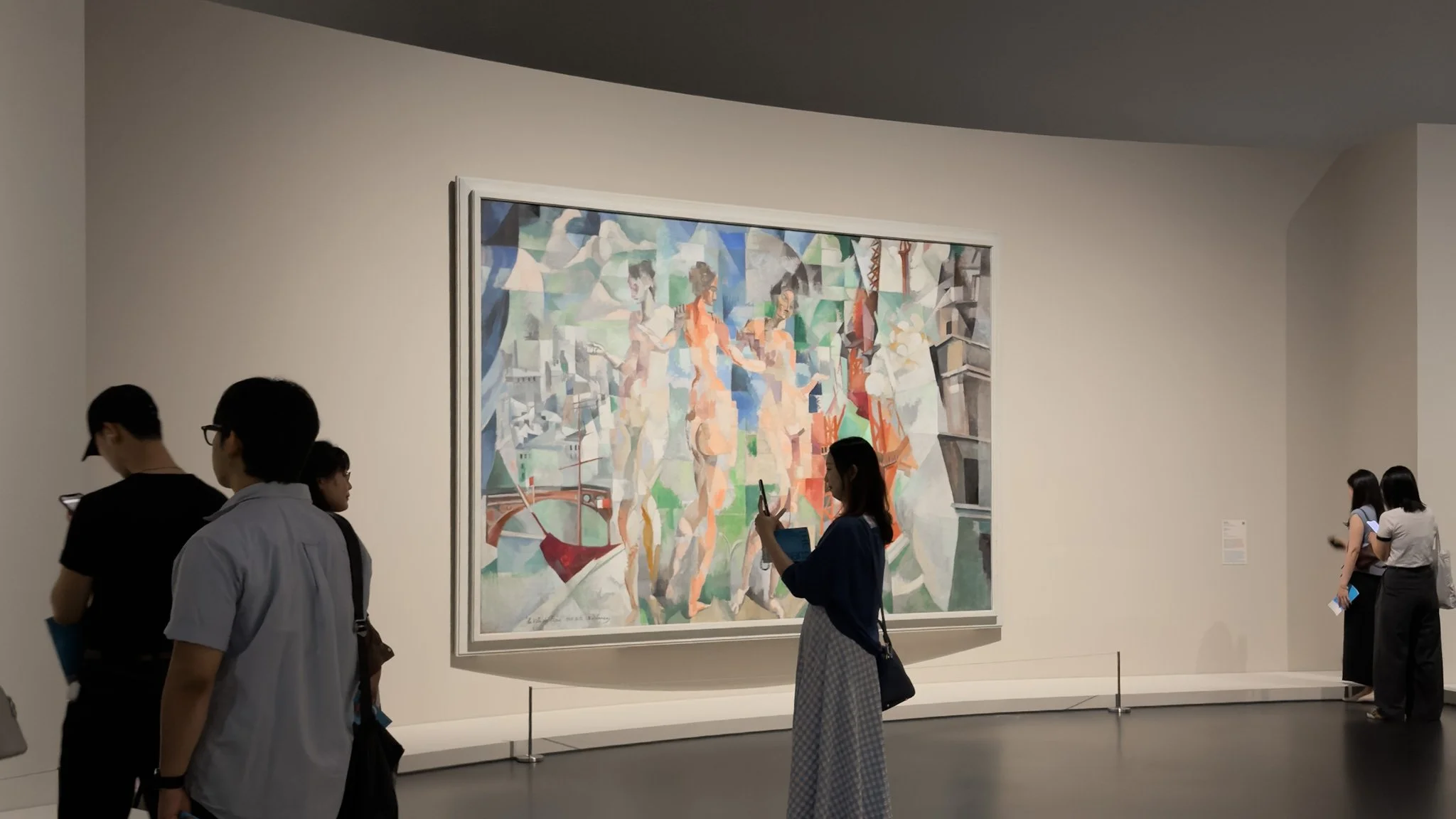
Installation view of The Cubists: Inventing Modern Vision at Centre Pompidou Hanhwa in yeouido Seoul. Photo: Diana Martinez
Centre Pompidou Hanwha opened in Yeouido this June, and Seoul's cultural map expands into a part of the city that has rarely featured in conversations about contemporary art. The institution's first exhibition, The Cubists: Inventing Modern Vision, runs June 4 through October 4, 2026, drawing 91 works from the Centre Pompidou collection in Paris and pairing them with a section devoted entirely to how Cubism shaped Korean modern art. It is a confident opening statement. Rather than easing in with a crowd-pleasing survey, the museum leads with a movement that rewired how art represented the world, then asks visitors to see Korea's own modern art history inside that story.
The Exhibition: Nine Sections, Two Decades of Cubism
The show traces Cubism from its earliest experiments in 1907 through its later, more decorative form in the 1920s, organized into nine chronological sections. It opens with the moment Picasso and Braque broke from traditional representation, shaped in part by Picasso's encounter with African and Oceanic art at the Trocadéro ethnographic museum in Paris. From there, it moves through Analytical Cubism's fragmented planes, the more publicly exhibited Salon Cubism, and Orphic Cubism's turn toward color and rhythm, before tracking how the First World War scattered the movement's artists and how Cubism settled into a more established style through the 1920s.
The roster includes the names most visitors will expect (Picasso, Braque, Léger, Juan Gris) alongside artists who get less attention in Korea, including Sonia Delaunay, Natalia Goncharova, and Robert Delaunay. The exhibition mixes painting with sculpture, drawing, and archival material, and that range matters here. Cubism did not stay confined to canvas, and seeing how it moved into three dimensions and into design gives the show a fuller picture of how completely the movement reshaped visual culture at the time.
Korea Focus: Reading Cubism Through Korean Modern Art
The exhibition's most distinctive decision is its Korea Focus section, placed in the mezzanine of Gallery 2. Rather than treating Cubism as a closed European chapter, this section follows how the movement's visual language reached Korean artists, first through encounters with geometric abstraction in the 1920s and 1930s, then more directly after liberation and the Korean War, when artists were actively searching for new formal languages of their own.
Works by Kim Whanki, Yoo Youngkuk, Park Rehyun, Lee Soo-auck, and Ham Daejeong sit at the center of this section. Lee Soo-auck's The Korean War, painted in 1954, uses Cubist structure to compress wartime devastation into a single dense plane. It is less a stylistic borrowing than a tool for confronting what the artist witnessed firsthand as a war artist. Park Rehyun's Open Stalls takes a different route, combining ink and color on paper with Cubist spatial division to turn an ordinary Seoul marketplace scene into something distinctly modern. Visiting this section after the main exhibition reframes the entire show. Cubism is not presented here as something Korea received secondhand. It is presented as a language that Korean artists rebuilt for their own circumstances.
A Building Designed Around the Art
Centre Pompidou Hanwha occupies the renovated annex of Yeouido's 63 Building, redesigned by French architect Jean-Michel Wilmotte into a four-story museum with two galleries of roughly 1,650 square meters each. The first artwork visitors see is not inside a gallery at all. Raymond Duchamp-Villon's bronze sculpture The Large Horse greets visitors in the ground-floor lobby, a piece widely considered one of Cubism's most significant sculptural works and a clear signal of what follows.
The layout rewards a slower visit. The first floor houses an auditorium and program spaces, along with a café that overlooks the Oudolf Garden. The top floor has a rooftop restaurant facing the Han River. For a museum opening in a neighborhood not typically associated with art, that view alone might be reason enough to make the trip out to Yeouido.
Talks and Public Programs
Centre Pompidou Hanwha has built a public program around the exhibition, including a lecture from Kim Youngna on Cubism's relationship to Korean modern art on June 6, and a talk from Woo Jung-A on the movement's broader expansion on June 17. A two-part curator talk on July 2 pairs Centre Pompidou's Christian Briend with the museum's own curatorial team for a closer look at both the European collection and the Korea Focus section specifically. More programming is expected to be announced as the exhibition continues through October.
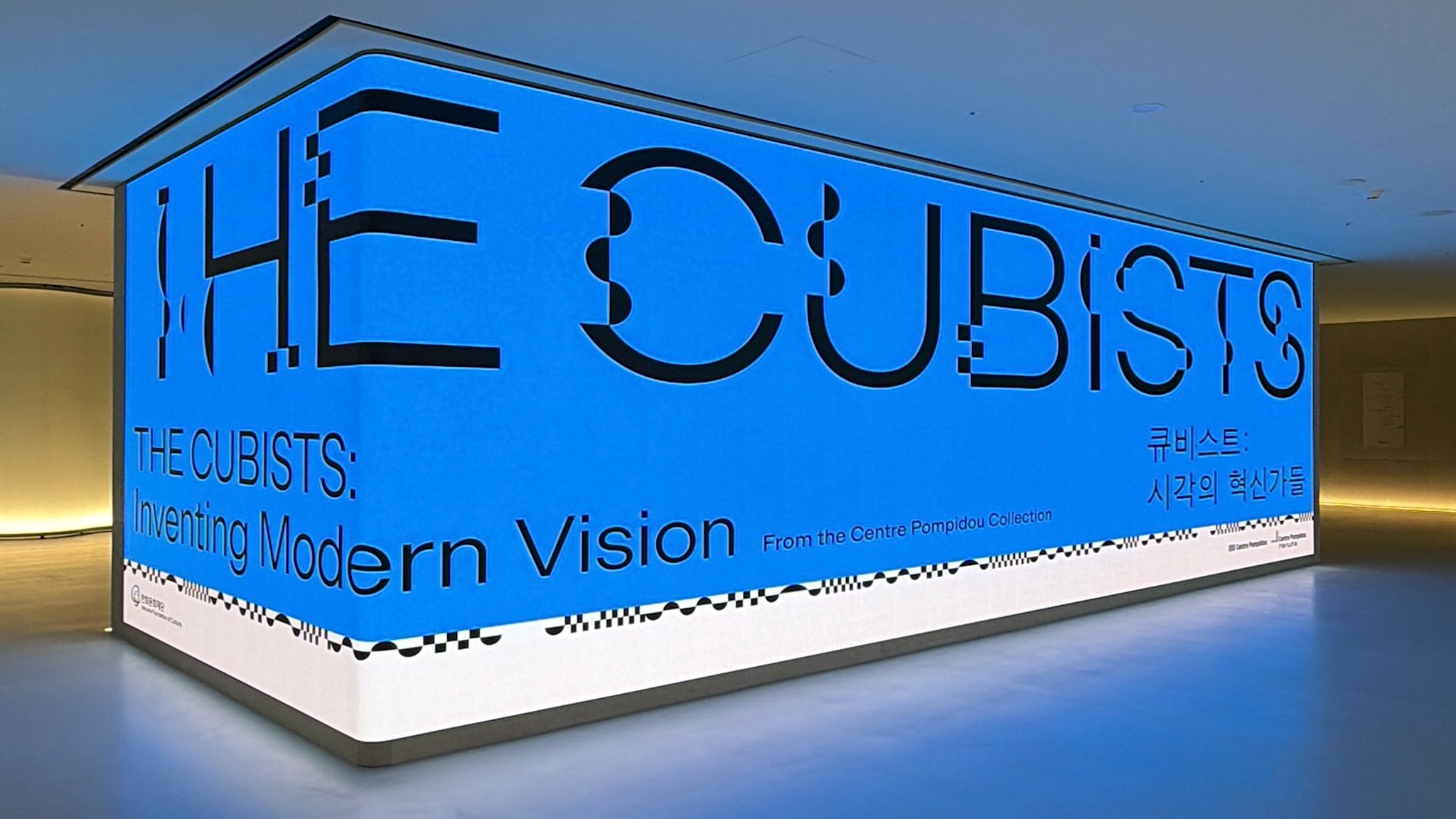
Installation view of Centre Pompidou Hanhwa in yeouido Seoul. Photo: Diana Martinez
Visit Information
The Cubists: Inventing Modern Vision Centre Pompidou Hanwha, Yeouido, Seoul
Dates: June 4 – October 4, 2026
Hours: Tue, Thu, Fri, Sun: 10:00–18:00 (last entry 17:30) Wed, Sat: 10:00–21:00 (last entry 20:30) Closed every Monday, January 1, Lunar New Year, and Chuseok
Admission: 28,000 KRW (adult, ages 19–64). Discounts for children, youth, and seniors.
Address: 63 Building, 50 63-ro, Yeongdeungpo-gu, Seoul
Reservations: Available now through the Centre Pompidou Hanwha website